

Epstein: The Man Who Only Followed the Logic of the System
Last year I wrote a novel set in 1890s Calcutta which was at the time roiled by the Age of Consent Bill. This very controversial bill being promoted by Bengali liberals proposed to raise the age of consent for women from TEN to TWELVE. The Hindu conservatives were up in arms and saw the proposal as the ultimate threat to Hinduism.
One compelling reason, amongst many, as to why the liberals ultimately forced the British to pass the law was the powerful testimony given by three working class women over the death of a girl in their family, Phulmoni. Phulmoni Dasi, was a 10-year-old girl, married to the 30-year-old Hari Maiti. She bled to death during sex with her husband. Although the women in the family gave eloquent testimony in court, Maity was not tried for murder because Phulmoni’s age, 10, was within the consent laws of the time.
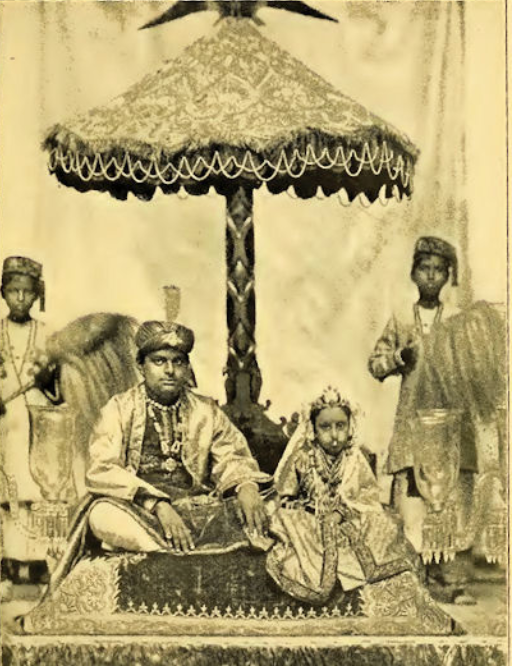
This is to say that male hunger for young girls, and consequent sexual violence, are not peculiar to capitalism but combined they form the bedrock of *class society*. I could give several historical examples, from different parts of the world, from different forms of class societies (tributary, feudal, slave etc) to demonstrate my claim, illustrating it with myths about virgins, folklores about the aphrodisiacal powers of children’s blood and so on.
But something did change with capitalism.
In the precapitalist world, different modes of reproducing life co-existed with each other without much contact between them. Thus, many native American societies had property-less emancipatory gender relations while neighboring Aztec society, a class society, didn’t.
Capitalism is, by its systemic nature, a global set of relations: “The need of a constantly expanding market for its products chases the bourgeoisie over the entire surface of the globe. It must nestle everywhere, settle everywhere, establish connections everywhere.” And homogenize, homogenize—everything must be a comparable unit.
I saw this most clearly in women’s body types in Bollywood before and after liberalization. Up until the early 1980s, the absurd thin-ness that now characterizes both global cinema and fashion was not common in the Bombay industry. Hema Malini, Sridevi were huge stars. But with the 1990s came the liberalization of the Indian market and Aishwariya Rai. She looked so interchangeable with Western models of the times that very quickly she became the face of global brands such as L’Oréal and Longines. She was on Letterman and Oprah. The magazines crowed: “Aishwarya redefined what Indian beauty meant for the global market.”

It is in this context, with a backdrop of centuries of patriarchal male fantasies mixed with capitalist coherence, that we must understand why the global ruling class found such a refuge in what Epstein “offered.” If you read carefully, you will detect an industrial efficiency about his operations. There was a “production line” and a system of supply and distribution, of both children and favors. Inherent to this “system,” was the legal logic of capitalism—one law for the powerful and another for the plebes.
Epstein offered the perfect capitalist product that the rich crave in many forms: immunity. He bound them in a global brotherhood of violent, murderous secrets that they literally laughed and joked about. Everyone who came within the orbit of the rich—media houses, politicians—knew about it but played the same game that they now play over Gaza. It is a visible invisibility. In other words, you and I can “see” it, but capitalism only allows it to be “visible” if it suits its purposes.

One of Epstein’s clients wrote “Your littlest girl was a little naughty.” If we are in the process of dismantling the system, and you have second thoughts, those are the words you should recall.